By: Montana State University Expansion
There are Montanans that, due to their conditions, might benefit from having a Power of Attorney (POA). A POA is a file in which someone offers an additional person the power to perform certain actions on his or her behalf.
Introduction
There are Montanans who, due to their scenarios, can benefit from having a Power of Attorney (POA). A POA is a paper in which one person offers an additional individual the power to carry out particular activities on his or her part. Instances of situations in which a composed POA could be valuable consist of:
A single woman whose mom has Alzheimer’s condition understands she would require someone to make financial decisions if she develops the same problem. A grown-up with a cognitive or psychiatric handicap that lives and works individually, yet needs aid with economic choices. An elderly granny with macular deterioration desires her child to determine expenses received in the mail and write checks for them because she can no more see. A better half and hubby that wish to provide each other authority to manage funds must either one need to end up being incapacitated.
This write-up has actually been adapted from the Montana State College Expansion Workplace’s MontGuide, “Power of Attorney.” The purpose of this MontGuide is to provide info concerning the Montana Attire Power of Attorney Act(effective October 1, 2011). The Act lays out arrangements for the production and use a POA and supplies safeguards that are made to safeguard:
The individual that offers the power (principal); The individual that is authorized to choose in behalf of the principal (representative); and, Those who are asked to count on the POA authority, such as financial institutions, businesses and various other entities.read about it Get District of Columbia Dmv Power of Attorney in PDF from Our Articles
The MontGuide also highlights some of the risks of a POA and clarifies functions of two forms that were consisted of in the Act:
Montana Statutory Power of Attorney Agent’s Certification regarding the Validity of Power of Attorney and Representative’s Authority Statutory types are available to download and install on this website and at the MSU Expansion Estate Planning web site under the Power of Attorney MontGuide.
Why have a Power of Attorney (POA)?
With a POA a person (principal) can designate one more person (agent) to act on the major’s part. The representative can authorize legal files when the principal is unavailable, when the principal chooses the comfort of having another person sign, or when the major becomes incapacitated.
Instance A:
Sara (primary), a homebound elderly mom who comes to be flustered and emphasized when confronted with monetary decisions, wanted her daughter (representative) to have the authority to compose checks to pay for grocery stores, medication and various other personal products for her. Sara signed a POA to give authority for her child to perform not only these kinds of actions, yet additionally to make any other monetary choices for Sara in the future.
Example B:
Jack (primary), a Montana National Guardsman that has been released overseas, signed a POA that gives his other half (agent) authority to sell their home. He likewise licensed her to redeem a deposit slip labelled entirely in his name that will certainly reach maturity while he runs out the country. Jack’s POA restricts his other half’s activities to those 2 transactions just.
A POA paper can be produced by utilizing the legal form described in this MontGuide or by having an attorney prepare one. The legal form may appropriate for numerous Montanans. Nevertheless, those with complicated funds or unique scenarios might wish to seek advice from an attorney.
What are some of the risks of a POA?
The major threat for the principal is the feasible dishonesty of the representative. However, there have been instances of agents who proved to be untrustworthy and misused cash coming from the principal. And, most of the times the money can not be recovered.
Instance C:
David, a Montana National Guardsman, named his papa as agent in a POA prior to he was released overseas. David’s pay was deposited in an interest-bearing account that his father can access under the POA. Unknown to David his daddy had a betting addiction and shed every one of his personal funds, as well as every one of the money in David’s interest-bearing account. David did not find his father’s abuse of the funds until he returned to Montana a year later. Although David might have litigated in an attempt to recuperate his cash, he selected not to do so because he didn’t intend to sue his own papa. He also understood there were no possessions to be recouped because his papa gambled away every little thing.
Example D:
Marlene, a senior widow, spoke to an attorney to prepare a POA naming her niece, Beth, as agent. The attorney asked Marlene why she felt she required a POA at this moment in her life. He likewise asked Marlene regarding her partnership with her niece. He encouraged Marlene of the danger that Beth could misuse her possessions. Marlene decided her risk of future inability exceeded the risk that her niece can misuse the POA. 6 months after the POA was signed, Marlene found her supplies and bonds had been sold by her niece. Beth made use of Marlene’s money for her individual usage. Although Marlene could sue her niece, she would certainly recoup nothing because Beth had no assets.
That should be called as representative in a POA?
Just the principal can choose who need to work as representative. The person requires to be somebody the major depend accomplish the responsibilities mentioned in the POA. A representative does not need to be a loved one. The principal must avoid calling a person who is ill, someone who has trouble managing money, or a person that is inexperienced in economic issues.
What are the responsibilities of a representative?
The principal should notify the agent what authority (often called a power) has been given up the POA file and be sure that the representative recognizes what activities can be taken. The discussion ought to additionally include a clarification of the primary’s monetary passions and how the possibility choices of the representative might influence those passions.
The Montana Attire POA Act provides the representative’s responsibilities and details authority. Additional information can be found in the Montana Code Annotated § 72-31-301 through § 72-31-367.
The Montana Statutory POA act additionally includes a section, Important Details for Agent, defining a few of the representative’s tasks and situations for discontinuation of the agent’s authority. The area likewise knows regarding prospective obligation for any type of losses triggered by the agent’s offenses of the Montana Attire POA Act, including any activities taken outside the authority offered by the principal. The principal must ask whether the agent agrees to think the duties and responsibilities as outlined in the Montana Attire POA Act.
What choices can a representative make on the major’s
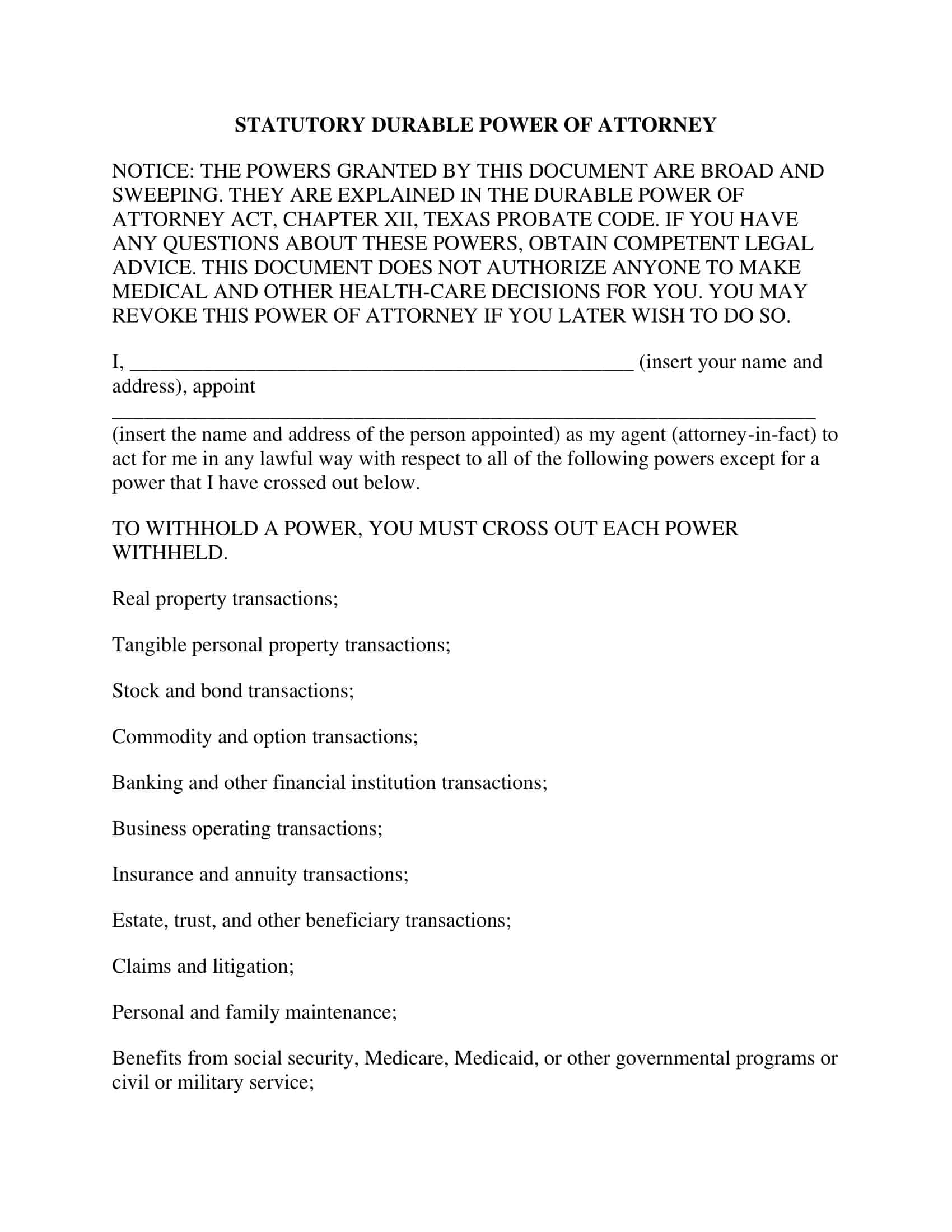
behalf? The major decides what actions can be taken by the agent. The legal form within the Montana Uniform POA Act provides a listing of transaction categories that can be included in the representative’s general authority:
- Real property;
- Substantial personal effects;
- Stocks and bonds;
- Commodities and choices;
- Banks and various other banks;
- Operation of entity or company;
- Insurance coverage and annuities;
- Estates, counts on, and other beneficial interests;
- Claims and litigation;
- Personal and household maintenance;
- Gain from government programs, civil or army solution;
- Retirement plans; and
- Tax obligations.
What added decision-making authority can be provided to a representative in a POA?
The Montana Uniform POA Act lists specific actions the representative can take, but only if the major particularly mentions the powers in the POA. The principal should meticulously think about whether the extra powers below should be offered to an agent as they could significantly influence the primary’s estate strategy.
- Create, modify, withdraw, or terminate a revocable living trust;
- Make a gift;
- Create or change civil liberties of survivorship;
- Create or change a recipient designation;
- Forgo the major’s right to be a recipient of a joint and survivor annuity; consisting of a survivor benefit under a retirement plan; or
- Disclaim residential or commercial property.
Nevertheless, an agent is not allowed to write a will for a principal. Neither can a representative use POA authority to straight stand for the principal in court.